
How Memory Works: Why Uninterrupted Focus and Choice Matter for Young Learners
Memory is a fundamental component of how children learn, explore, and make sense of their world. Yet, as parents, we often take the mechanics of memory for granted, rarely stopping to reflect on how memories are actually formed—and how our educational approach directly supports this neurological process.
When a child forgets a direction, loses track of an item, or struggles to recall a lesson, it is rarely a matter of effort. More often, it is simply because the brain was not given the specific inputs required to encode, consolidate, store, and retrieve that information.
Understanding the Four Steps of Memory
To understand how children retain information, it helps to look at how the brain processes experiences. Memory creation relies on four sequential steps:
- Encoding: The brain captures raw information through the senses—sights, sounds, tactile sensations, and emotional connections. Information is translated into neurological language based on what a child pays attention to in the moment.
- Consolidation: The brain links these scattered sensory inputs into a single pattern of neural connections. Consolidation requires time and stability; if a child is abruptly interrupted during this phase, the fragile memory path can be lost or degraded.
- Storage: The neural pattern is maintained over time through chemical and structural changes in the brain.
- Retrieval: The brain reactivates these existing neural pathways to recall, recognize, or re-experience what was learned.
All four steps must occur smoothly for an experience to become a accessible long-term memory.
Attention Is the Gateway to Memory
The human memory does not function like a video camera recording everything in its field. The brain only captures and retains what receives active attention.
Children (and adults) naturally direct their attention toward experiences that are novel, meaningful, emotionally resonant, or personally interesting. When learning feels forced or disconnected from a child's natural interests, maintaining attention requires immense cognitive effort, making encoding far less efficient.
How the Montessori Approach Directly Supports Memory
At Twin Parks Montessori School, across our Central Park, Park West, and Riverside campuses, our prepared environments are intentionally designed around the neuroscience of learning and memory.
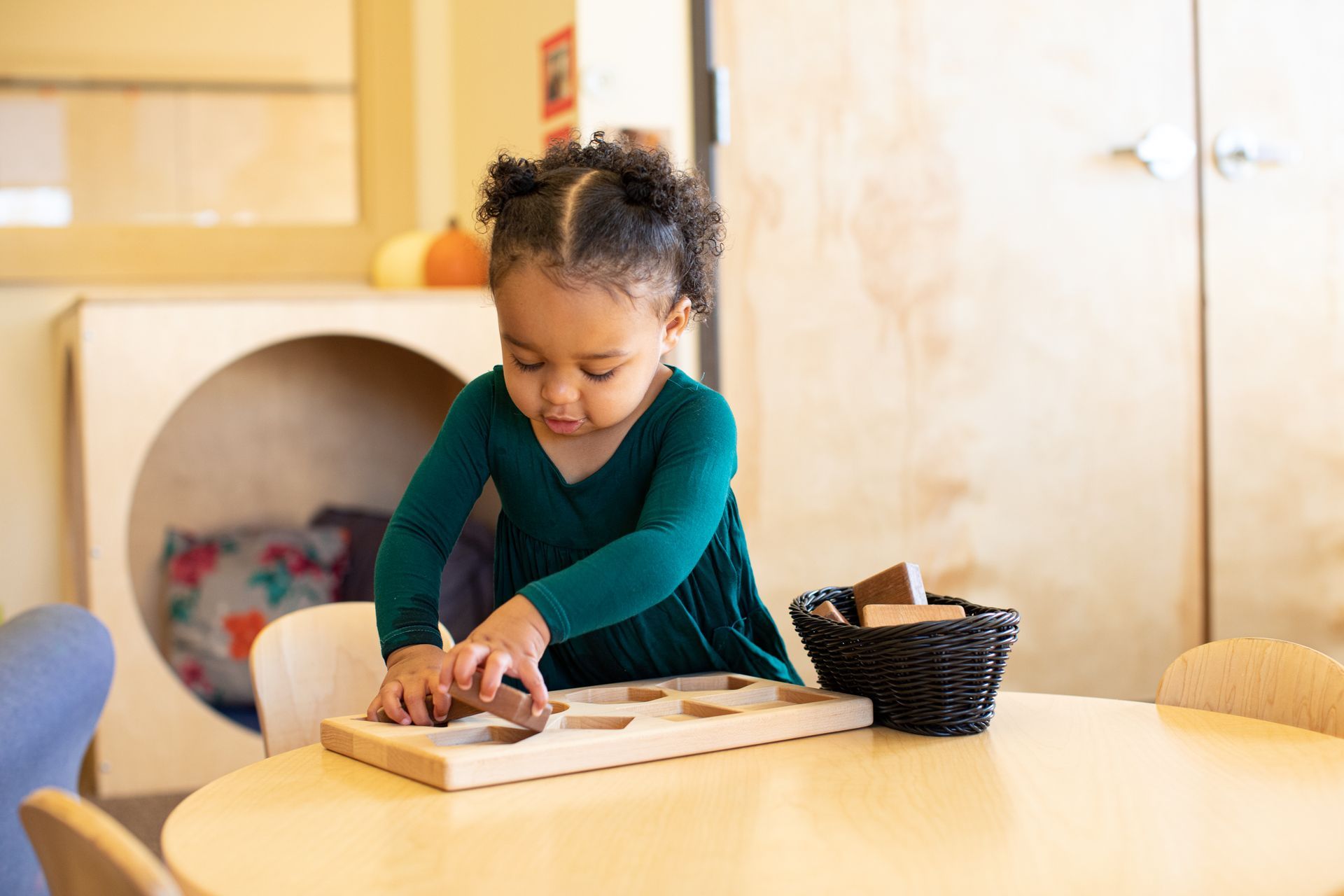
- Interest-Driven Learning (Optimizing Encoding): In our Infant, Toddler, and Early Childhood classrooms, children are guided toward materials that align with their current developmental needs and personal interests. When a child chooses their own work—whether meticulously pouring water, exploring geometric shapes, or practicing letter sounds with Sandpaper Letters—their intrinsic motivation heightens attention, ensuring strong, natural encoding.
- The Three-Hour Work Cycle (Protecting Consolidation): Because memory consolidation is easily disrupted by frequent transitions, our classrooms utilize uninterrupted work cycles. Giving children extended, uninterrupted time allows them to settle deeply into their chosen activities. Their brains have the quiet space needed to link experiences into lasting neural associations without the friction of rigid, hourly schedules.
- Focusing on the Positive (Strengthening Connections): Neurologically, what we pay attention to is what we store. Our guides focus on positive reinforcement, peaceful conflict resolution, and gentle re-teaching rather than punitive corrections. This creates a positive feedback loop, helping children build neural pathways associated with confidence, joy, and academic success.
Supporting Memory at Home
You can support these same principles in your home routine:
- Minimize unnecessary interruptions when your child is deeply engaged in play or a practical household task.
- Offer choices within clear boundaries to encourage active attention and ownership.
- Highlight positive efforts and achievements to reinforce confidence and positive memory consolidation.
Understanding the connection between attention, uninterrupted focus, and memory allows us to create environments—both at school and at home—where learning feels natural, joyful, and lasting.
(For parents interested in diving deeper into the science of memory, we highly recommend reading
Remember: The Science of Memory and the Art of Forgetting by neuroscientist Dr. Lisa Genova.)