
Building Independence from the Start: The Transformative Power of Practical Life
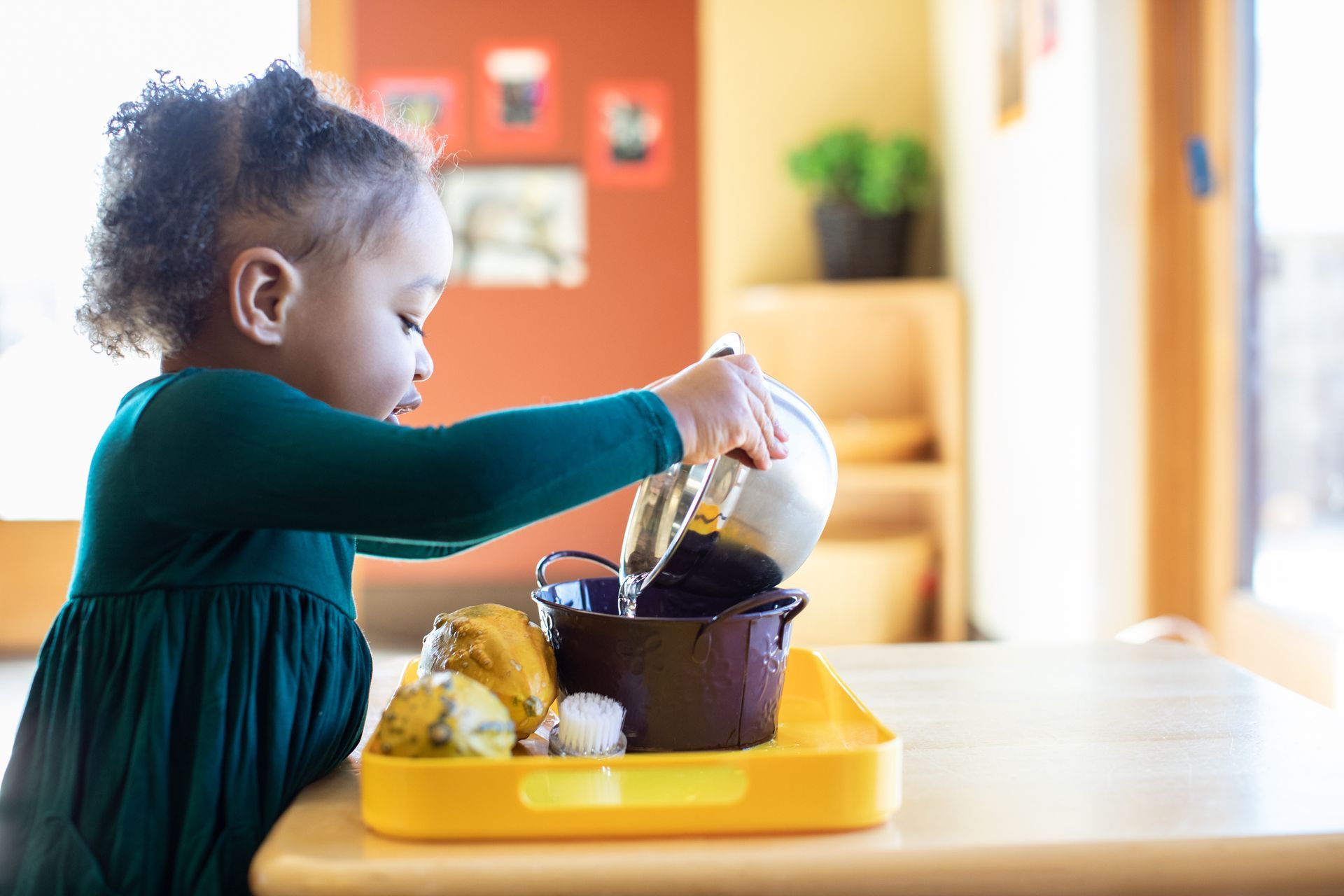
In our daily lives as adults, we move through countless domestic routines without giving them much thought: wiping down the kitchen counter, setting the dinner table, watering house plants, or hanging up a coat. But to a young child, these everyday tasks hold an irresistible fascination. Young children yearn to participate in the real, tangible workings of their world and take immense pride in doing meaningful work alongside the adults they adore.
In the Montessori approach, we call these purposeful daily tasks Practical Life activities. Far from being simple chores, Practical Life is the beating heart of our Infant, Toddler, and Early Childhood classrooms at Twin Parks Montessori School.
Whether an infant is learning to pull off their own socks, a toddler is carefully pouring water from a small glass pitcher, or an early childhood student is scrubbing a work table, these real-world activities help children build deep concentration, physical coordination, self-reliance, and a profound sense of belonging.
Two Purposes: One External, One Internal
Every Practical Life activity in a Montessori classroom serves two distinct, interconnected purposes:
- The External Purpose: This is the visible, functional outcome of the work. When a child scrubs a table, the table becomes clean. When a child waters a plant, the plant thrives.
- The Internal Purpose: This is where the true developmental transformation happens. Through the precise, ordered movements required by Practical Life work, children build fine motor control, hand-eye coordination, spatial awareness, and executive function. More importantly, they internalize a belief in their own capability: "I can care for myself, I can care for my community, and my contribution matters."
When children are invited to participate in meaningful work, they develop a sense of agency and pride. Over time, these small, daily triumphs lay the foundation for future independence, problem-solving, and emotional self-regulation—skills that support them as they transition into ongoing schools and grow into confident, caring adults.
Preparing the Environment for Success
Walk into any classroom across our Central Park, Park West, and Riverside campuses, and you will see an environment intentionally prepared to meet the physical scale and developmental needs of young children:
- Sinks, shelves, and coat hooks are set at the child’s height.
- Cleaning cloths, small brooms, and dustpans are sized appropriately for small hands.
- Pitchers, glass vases, and serving dishes are made of real, breakable materials so children learn gentle handling and natural consequences.
- Every activity is complete, ordered, and stored in a designated place so children can choose, complete, and return their work independently.
This thoughtful preparation transforms tasks that adults used to do for the child into tasks the child can accomplish themselves.
Even in our Infant environments, Practical Life begins through respectful collaboration. Rather than rushing through dressing or diaper changes, our guides speak directly to the child, inviting their participation: "I am going to slide your right arm into this sleeve now. Can you reach your hand through?" This respectful partnership honors the child’s dignity from the very start.
Caring for Self and Community
In a Twin Parks classroom, Practical Life encompasses four primary areas:
- Care of Self: Washing hands, dressing, buttoning, tying shoes, preparing a healthy snack, and toilet learning.
- Care of the Environment: Sweeping, dusting, polishing wood or metal, watering class plants, folding laundry, and washing dishes.
- Grace and Courtesy: Practicing how to greet guests, hold a door, wait patiently for a turn, excuse oneself, and use quiet indoor voices.
- Control of Movement: Carrying heavy trays, walking carefully around work mats, and balancing.
These are not pretend play or "toy" tasks. They are real, necessary contributions to the classroom community, and children take immense satisfaction in knowing their work is genuinely needed.
Bringing Practical Life Home: Simple Ways for NYC Families
Parents often ask our guides how they can replicate Practical Life success in an urban home environment. The good news is that you don't need a special Montessori setup or expensive materials—just a willingness to slow down and invite your child into your daily household rhythms.
Simple Ideas for Your Home Routine:
- Accessible Entryways: Place a low hook at your child's height for their coat and a designated basket for their shoes near the front door.
- Self-Serve Meal Prep: Keep child-sized placemats, napkins, and child-safe utensils in a low kitchen drawer so your child can help set the family table.
- Child-Sized Cleaning Tools: Provide a small spray bottle filled with water, a soft cloth, or a small broom so your child can help clean up spills or sweep under the dining table.
- Independent Snack Access: Store healthy snacks and small water dispensers on a low shelf in the kitchen so your child can serve themselves when hungry.
A Simple Checklist Before Introducing a Home Activity:
- Is it child-sized and safe? (e.g., a small, light pitcher rather than a full gallon of milk)
- Is it logical and real? (Does it serve an actual purpose in your home?)
- Does it allow for repetition? (Can the child practice without being rushed?)
- Is it organized clearly? (Does the child know where to get the items and where to put them away?)
The Joy of Purposeful Work
When we give children the time, tools, and trust to care for themselves and their surroundings, we see a remarkable change. Children become calmer, more focused, and deeply satisfied. They move from asking adults to do things for them to proudly declaring, "I can do it all by myself!"
We invite you to
schedule an information session to learn more!